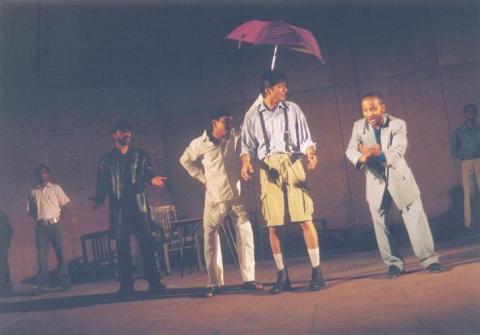
Monday, October 15, 2007

Mahesh Dattani 's 30 Days in September


Directed by Arvind Gaur
Translation in Hindi By Smita Nirula
27th October,7pm
Shri Ram Centre, Mandi House,New Delhi
Contact-9899650509
About the play
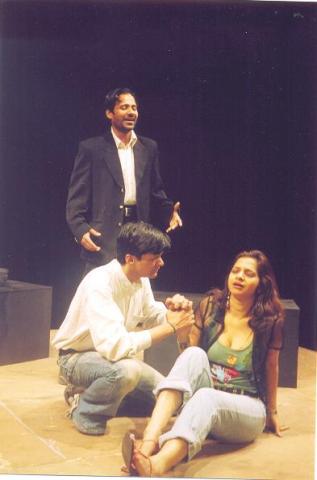
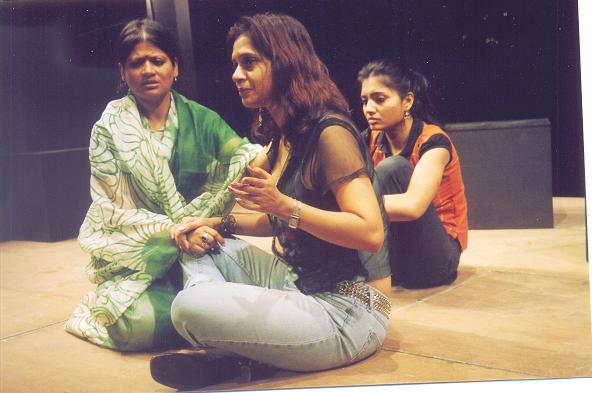
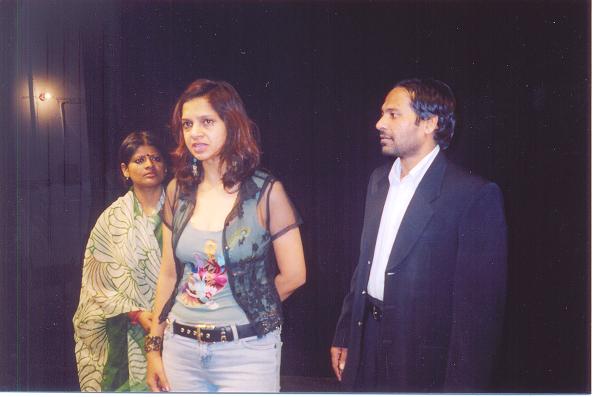
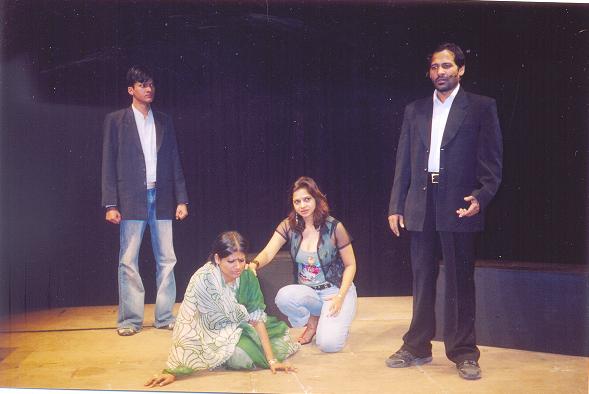
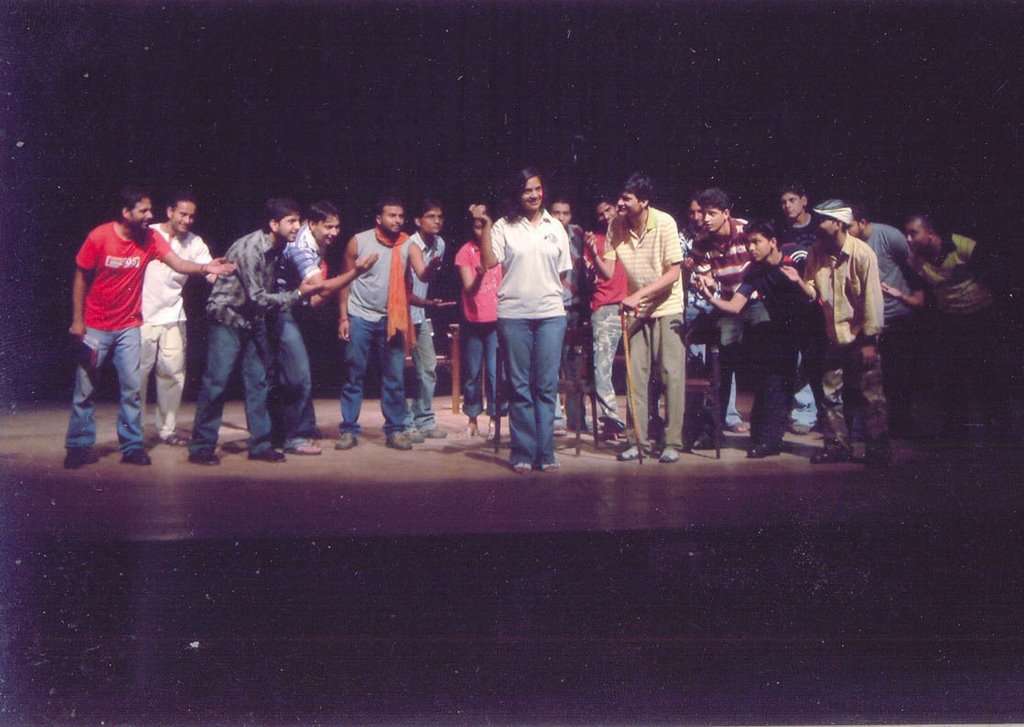
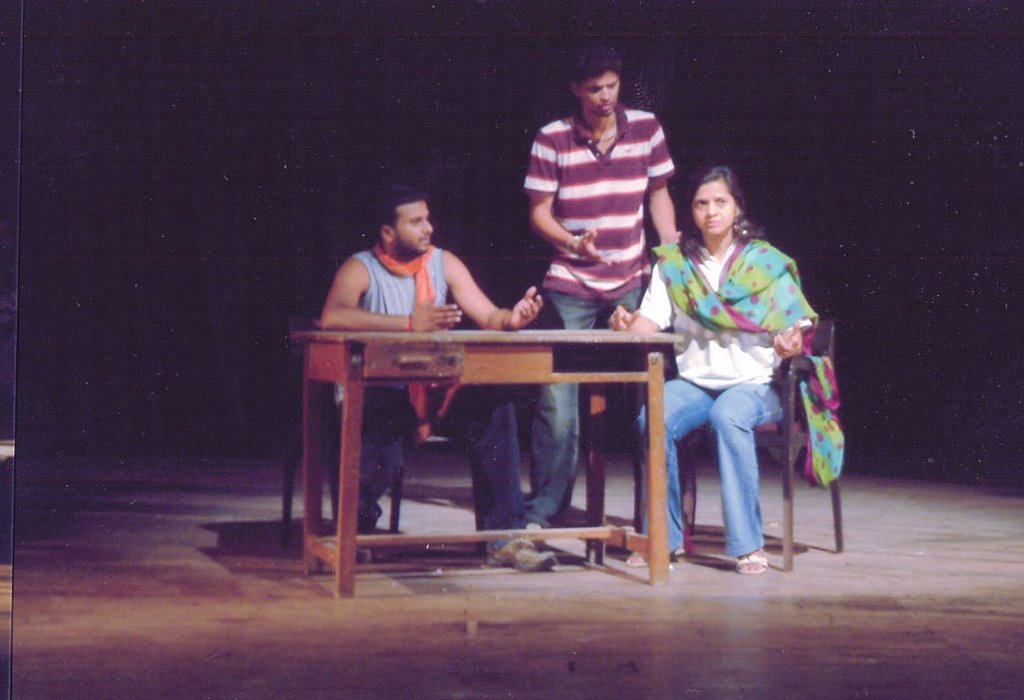
A play about love and betrayal, 'Thirty Days' treats the sensitive and generally taboo issue of child sexual abuse. 'Thirty Days' endeavors to lift the veil of silence which surrounds child sexual abuse and addresses the issue unflinchingly.It builds on the trauma of Mala who lives with the haunting memories of her abused past.
Her abuser - her uncle “ subconsciously lives with her all the time, as part of her dirty reflections. He damages her natural growth, deters her from pursuing her love interests beyond the ominous 30-day period and scars her soul every now and then. As Mala withers under the psychological pressure extorted on her by the abuser, her mother watches silently, living her own pain - suffering mutely.
Exploring the painful problem, Mahesh Dattani raises valid concerns and structures a world of optimism where the wrongs can stand corrected and resurrection of brutalized faith is possible. But none of this happens without another man's willingness to help the two women bury their traumatic past and find ways of rejuvenating their present. Deepak, Mala's boyfriend, becomes the agent of change here. He dares to unmask the evil, even at the cost of his love.
He hits the women hard until they hit the rock bottom. Finally, there is no way but to come up - face the wrongs and dare to correct them, notwithstanding the challenges the process of correction entails. By marking a daring departure from norm, the play ensures that we, as a society, no longer take comfort in the routine of uttering word "incest" in gutless undertones.The play also brings us closer to the reality of abused children -pleasure does form a part of their pain, but finally the consequence of dangerous games can only be dangerous. Our only way to fight danger is to recognize it and crush with generous doses of brutality lest we are ready to condemn innocence to lifelong death.
Arivnd Gaur's "30 Days in September" is worth watching. Mahesh Dattani builds his play around child abuse and tries to lift the veil on the hush-hush subject…..Lifting the veil ....ROMESH CHANDER, The Hindu
About Translator
Smita Nirula has been involved with theatre since her college days. She has a Master's degree in theatre from the State University of New York at Stony Brook, USA and a Bachelor's degree in theatre and journalism from McPherson College, Kansas, USA.She has been a theatre critic for the Indian Express,The Hindu and the Pioneer newspapers over the last 15 years. She has written extensively on theatre for various websites including ICICI's Café Dilli. She has worked in numerous productions both onstage and offstage(light design, set design, stage management) in India and America.
She has written plays which have been produced and published. Currently she is busy translating some of Mahesh Dattani's plays (including Dance Like A Man and Seven Steps Around The Fire) from English into Hindustani, and studying Vedanta.
About Mahesh Dattani
Mahesh Dattani, born in Bangalore on 7 August 1958, studied in Baldwin’s High School and St. Joseph’s College of Arts and Science, Bangalore.He has worked as a copywriter in an advertising firm and subsequently with his father in the family business. His theatre group Playpen was formed in 1984, and he has directed several plays for them, ranging from classical Greek to contemporary works.
In 1986, he wrote his first full-length play, Where There’s a Will, and from 1995, he has been workingfull-time in theatre. His major plays are Dance Like a Man, 30 Days in September, Bravely Fought theQueen,Final Solutions,Tara, On a Muggy Night in Mumbai.Dattani is also a film-maker and his films have been screened in India and abroad to critical and public acclaim.
His film Dance Like a Man has won the award for the Best Picture in English awarded by the National Panorama.In 1998, Dattani won the Sahitya Akademi award for his book of plays Final Solutions and Other Plays, published by East–West Books Chennai, thus becoming the first English language playwright to win the award.
Dattani teaches theatre courses at the summer sessions programme of Portland State University, Oregon, USA, and conducts workshops regularly at his studio and elsewhere. He also writes plays for BBC Radio 4.
‘[Dattani’s work] probes tangled attitudes in contemporary India towards communal differences, consumerism and gender… a brilliant contribution to Indian drama in English.’—Sahitya Akademi award citation

Spl. thanks to Dr. Manoj Kumar

Tuesday, September 18, 2007

Asmita Theatre Festival


15th September, 7.30pm
Swadesh Deepak's
COURT-MARTIAL
India Habitat Centre, Lodhi Road
Tickets Rs. 50 /
__________________________
16th September,7 pm
Mahesh Dattani's
30 DAYS IN SEPTEMBER
Hindi translation by Smita Nirula
Sri Ram Centre,Mandi House
Tkt Rs.!00/ & 50 /
___________________________
21st September,7pm
Neil Simons's
Comedy play based on Chekhov's stories
LOG-BAAG
PSK, Laxmi Nagar, Vikas Marg ,Entry free
___________________________
22nd & 23rd September,7.30 pm
Neil Simons's
Comedy play based on Chekhov's stories
LOG-BAAG
India Habitat Centre, Lodhi Road
Tickets Rs. 50 /

29th & 30th September, 7.30pm
Late Shri Nag Bodas's
Musical Comic- Satire
AMMA TUJHE SALAAM
Music by Dr.Sangeeta Gaur
India Habitat Centre, Lodhi Road
Tickets Rs. 50 /
__________________________
6th October, 7.30 pm
Dario Fo’s Comic- Satire
OPERATION THREE STAR
Hindi adaptation of Accidental Death of an Anarchist
Adaptation in Hindi -Amitabh Srivastava
India Habitat Centre, Lodhi Road , New Delhi
Tickets Rs. 50 /
__________________________
7th October, 7.30pm
Munshi Premchand’s Musical satire
MOTE RAM KA SATYAGRAH
Adaptation by Habib Tanveer and Safdar Hashmi
Music by Sangeeta Gaur
India Habitat Centre, Lodhi Road , New Delhi
Tickets Rs. 50 /

All Plays directed by Arvind Gaur
Contact-9899650509

http://www.indiantheatre.blogspot.com/

Court-Martial
When respect is denied to a man for the only reason that he is borne by 'low-caste' parents, the offence cannot simply be termed as a social violence. It assumes larger proportions of crime against humanity and society at large. Yet by the turn in situation the murderer becomes a winner whereas the victim is unforgiving.The culprit may receive severe punishment at the hands of the law but, in fact, it is the society which is put in the docks. Court Martial, written by Swadesh Deepak, is a story of recruit Ram Chander who is tried for murdering one of his officers and injuring another.
The Court Martial is presided by a war veteran. Col Surat Singh who has witnessed many 'life –and –death' situation. But this trial puts him in a queer position, so far unknown to him, and during the course of interrogation he realize that the issues at stake are much larger than what meets the eye. Realizing that the Indian army is the only government agency in which reservation on caste basis is not permissible. Court Martial presents a combination of legal and poetic justice.

Swadesh Deepak is a popular Indian playwright, novelist and short-story writer. Deepak has been active on the Hindi literary scene since the mid 1960s and is best known for
Court Martial, a path breaking play that he published in 1991. Deepak's most recent book is Maine Mandu Nahin Dekha, a volume of memoirs. Deepak's work has appeared in all major literary periodicals of India, and he has more than 15 published titles to his credit. Several of his works have been staged and made into television programmes.Deepakji holds masters degrees in both Hindi and English. For twenty-six years, he taught English literature at Ambala's Gandhi Memorial College.

CRITICS SAYS
"Tight pace of Swadesh Deepak's Court Martial... not to be missed." - Kavita Nagpal ,(Hindustan Times)

"Arvind Gaur's hard hitting realism... his intelligent approach... strong play by Swadesh Deepak."
- Aruna Ahluwalia, (E. News)

"Kudos to Court Martial... a drama that goes beyond the limits of drama." - (The Indian Express)

"The Asmita team has created a marvelous piece of theatre out of a wonderful script... don't miss it. The time spent watching the play is well worth it." - Smita Nirula, (The Pioneer)

"Stealing the scene with revolt as the theme... Court Martial is an engrossing display of theatre for social awareness."
- Sushama Chadha ,(The Times of India)

"Excellent Performance by Deepak Dobriyal as Captain Vikash Roy... Swadesh Deepak's brilliant script... memorable production by the Asmita team and Arvind Gaur."
- Romesh Chandra, (The Hindu)

"Impressive Presentation: The much-talked about play Court-Martial, directed by the eminent young theatre director Arvind Gaur, was successfully staged here at Gandhi Bhawan Auditorium, on the first day of Shahjehanpur Theatre Festival. Court Martial is probably the first Indian play, wherein an effort to expose the rot rampant in the Indian army has been made."

"Mirror of the Society: Court Martial is not just a play, but more aptly the real picture of the Indian society that brings us face to face with the caste-based feudalism, despite the constitutional & legal objections of the democratic procedures…Indian Army is one such government institution, which does not permit caste-based reservations. The play presents the truth very much prevalent in the Indian society. That, a person with merit, is traumatised just because of his low-caste origins. Can we march into the 21st century with such a narrow mindset? This is an important question that seeks an answer of us. Can we answer this question in this 50th year of our independence? Perhaps not!"
-Amit Kumar ,Rastriya Sahara

"Court Martial, scripted by Swadesh Deepak and directed by Arvind Gaur was staged at the Sriram Centre, on the first day of the ‘Asmita Theatre Festival’ organized by Asmita Production. The play is based on the caste-based discrimination rampant in the Indian Army. The strength of the play lies in its powerful dialogues that take it forward."

"Not Just a Play: ‘Court Martial’ is not just a play written by Swadesh Deepak, directed by Arvind Gaur & enacted by Asmita-artistes. It is a burning truth of the Indian Society. Sensing that Indian Army is the only government institution, which does not permit caste-based reservations, ‘Court Martial’ presents a mixture of natural and legal justice, which is not only the truth of the Indian Army, but that of the whole Indian Society. That, despite all his qualifications, an individual is traumatised because of his low-caste origins is not merely social violence, but a crime against humanity. The monotony of the long court-trial was pre-empted by the seasoned performance of the Asmita artistes. This Asmita-presentation has proved to be a soothing experience, after many years, for Swadesh Deepak who created a countrywide flutter through this play. "
Excellent acting, live and memorable…..worth visit.
- Ajeet Rai (Nav Bharat Times)

30 DAYS IN SEPTEMBER
A play about love and betrayal, 'Thirty Days' treats the sensitive and generally taboo issue of child sexual abuse. 'Thirty Days' endeavors to lift the veil of silence which surrounds child sexual abuse and addresses the issue unflinchingly.
It builds on the trauma of Mala who lives with the haunting memories of her abused past.
Her abuser - her uncle – subconsciously lives with her all the time, as part of her dirty reflections. He damages her natural growth, deters her from pursuing her love interests beyond the ominous 30-day period and scars her soul every now and then. As Mala withers under the psychological pressure extorted on her by the abuser, her mother watches silently, living her own pain - suffering mutely. Exploring the painful problem, Mahesh Dattani raises valid concerns and structures a world of optimism where the wrongs can stand corrected and resurrection of brutalized faith is possible. But none of this happens without another man's willingness to help the two women bury their traumatic past and find ways of rejuvenating their present.
Deepak, Mala's boyfriend, becomes the agent of change here. He dares to unmask the evil, even at the cost of his love. He hits the women hard until they hit the rock bottom. Finally, there is no way but to come up - face the wrongs and dare to correct them, notwithstanding the challenges the process of correction entails. By marking a daring departure from norm, the play ensures that we, as a society, no longer take comfort in the routine of uttering word "incest" in gutless undertones.
The play also brings us closer to the reality of abused children -pleasure does form a part of their pain, but finally the consequence of dangerous games can only be dangerous. Our only way to fight danger is to recognize it and crush with generous doses of brutality lest we are ready to condemn innocence to lifelong death.

Arivnd Gaur's "30 Days in September" is worth watching.Mahesh Dattani builds his play around child abuse and tries to lift the veil on the hush-hush subject. Lifting the veil
-ROMESH CHANDER, The Hindu

About Translator
Smita Nirula has been involved with theatre since her college days. She has a Master's degree in theatrefrom the State University of New York at Stony Brook, USA and a Bachelor's degree in theatre and journalism from McPherson College, Kansas, USA. She has been a theatre critic for the Indian Express,The Hindu and the Pioneer newspapers over the last 15 years. She has written extensively on theatre for various websites including ICICI's Café Dilli. She has worked in numerous productions both onstage and offstage(light design, set design, stage management) in India and America. She has written plays which have been produced and published. Currently she is busy translating some of Mahesh Dattani's plays (including Dance Like A Man and Seven Steps Around The Fire) from English into Hindustani, and studying
Vedanta.

LOG-BAAG
Depicting lives of everyday mortals "LOG-BAAG" reveals myriad of moods, class distinctions and various shades of mind and attitude. A play with eight short stories of
chekhov woven together, each individualy depicting a slice of life. Yet, the common thread that binds them together is the essential conflict between "What should be" and "What is" and also the typical Chekhovian end that undercuts each story as a very first last moment.The stories can be seen as seemingly transaprently simple yet with great subtlety Chekhov undercuts mammoth institutions like, Bureaucracy , parenting , marriage , medicine ..... yet at the same time chekhov goes behind social institutions and with great sensitivity revelas glimpsis of human emotions of insecurity, namelessness, confusion , pain .......The playwright Neil Simen has brilliantly selected the short stories such that each one dipicts the complex facets of the writer in the play. The writer's conflict at penning down his experiences as stories, itself is an organic story in the play.

Critics says
LOG-BAAG" one of Gaur's best play ... Best play of the year award...classy play of high standards.
-The Hindu

Real life stories ... Effective Satire and Comic
-Rashtriya Sahara

Interesting and Encapsulating..... Effective -Jan Satta
Competently witty direction..... Pleasant and entertaining evening
-Pioneer
Amusing play.... Built in fun.... Outstanding theatre
-Hindustan Times

Amma Tujhe Salaam
Amma Tujhe Salaam written by the late Shri Nag Bodas is a social satire centred on the lives of beggars, a class of people who have been made outcasts by a consumer-centric society that rejects its own children in their hour of need. The play exposes the hypocrisy of social rules and norms, through the story of Bhura, a handicapped mechanic who loses everything when he is betrayed by those closest to him. In spite of the harshness he faces in his new world, he maintains his integrity and continues to dream of small joys. When he runs into Chhalni and her two children who have never known a world outside beggary, he teaches them to do the same.
In the meantime, Jaggi "Boss" and his two sidekicks Tanny and Teja, who are aspiring underworld dons, portray another facet of social disharmony.
Their story reflects the frustration of having un-met needs, and the other side of social impact: a struggle for power and finally emergence into a mirror image of the system itself, symbolizing ambition and ruthlessness.
The issue of trafficking of women and children also forms a sub-plot of this play. The horrifying transformation of innocent childhood joys to mental instability and lifelong scars is worthy of thought, and adapted well into the main storyline.

Operation Three Star
(Hindi adaptation of Accidental Death of an Anarchist)
Grounded in a very specific, disturbing political reality the Operation Three Star offers a scathing comment the real events which are criminal and obscene in their brutality: Crimes of the state .With his seemingly insane logic the maniac is instrumental in unmasking the criminal folly of the law enforcing agency in its attempts to cover up heinous action. He persistently ridicules the police's shaky case and forces them to re-enact the situation in that led to the 'suicide' of a 'terrorist' under their custody.
Subsequently, they contradict themselves to dismantle the whole issue of half-truths and non-sequiturs.
An escalating series of impersonations and misunderstandings extend a particular viewpoint. The jerk from comic gags to a fuller awareness of serious issue becomes a potent device as the crude violence of the power-that-be is recognized.

Mote Ram ka Satyagrah
the play is a comic-satire with all the elements of a musical. On the surface, the play appears to be a simple story about a Brahmin from Banaras . The town of Banaras adorns itself to receive a Vice Roy, as per the directions given by the Magistrate- Sir William Parkinson. Pandit Mote ram Shastri, the protagonist seems to have bitten more than he can chew, and agrees to go on a hunger strike to stop the people of the town from declaring a "Hartal". Whether or
not the pundit succeeds in controlling his hunger brings the play to its comical climax. There is more to this play then meets the eye. It deals with larger issues of the relationship between Religion & Politics. The play Wright, intricately
weave the threats of this rather sensitive subject into a cohesive and entertaining play.
The issues raised are as relevant and contemporary now, as they were under the colomset's rule.

Thanks for your kind support to relevant theatre.
Viren Basoya

Thursday, April 12, 2007

Photographs of Operation Three Star


Dario FO’s
Operation Three Star
Actors
Inspector Vajpayee-Pusparaj Rawat
Havaldar-Sunil Rawat
The Maniac-Sandeep Srivastava
Inspector Pahuja-Sailendra Bist
S.P.Varma-Girish Pal
fatima Abasi-Jyoti Varma

Hindi adaptation of Accidental Death of an Anarchist
Adaptation in Hindi -Amitabh Srivastava
Lyrics-Piyush Mishra,
Main Park, DA flats, Timarpur,
Delhi-54, Free Entry
15th April,9 pm

Wednesday, April 11, 2007

April plays-Court martial,30 days in September,Operation Three Star,Mote Ram ka Satyagrah


Asmita arts group
April 2007, Theatre Calendar


14th April,7pm
Swadesh Deepak’s

COURT-MARTIAL
Sri Ram Centre, Safdar Hashmi Marg,
Mandi House,
Tickets Rs. 50 / & Rs.100/

15th April,7pm
Mahesh Dattani's
30 DAYS IN SEPTEMBER
Hindi translation by Smita Nirula
Sri Ram Centre, Safdar Hashmi Marg ,Mandi House New Delhi
Tickets Rs. 50 / & Rs.100/

15th April,9 pm
Dario FO’s
Operation Three Star
Hindi adaptation of Accidental Death of an Anarchist
Adaptation in Hindi -Amitabh Srivastava
Lyrics-Piyush Mishra,
Main Park, DA flats, Timarpur, Delhi-54, Free Entry

21 and 22nd April,7pm
Swadesh Deepak’s
COURT-MARTIAL
India Habitat Centre, Lodhi Road , New Delhi ,
Tickets Rs. 50 /

28th & 29th April,7 pm
Musical satire
Mote Ram ka Satyagrah
Adaptation by Habib Tanveer and Safdar Hashmi ,
Music by Sangeeta Gaur
India Habitat Centre, Lodhi Road , New Delhi ,
Tickets Rs. 50 /
All Plays directed by Arvind Gaur

Court- martial
When respect is denied to a man for the only reason that he is borne by ‘low-caste’ parents, the offence cannot simply be termed as a social violence. It assumes larger proportions of crime against humanity and society at large. Yet by the turn in situation the murderer becomes a winner whereas the victim is unforgiving.The culprit may receive severe punishment at the hands of the law but, in fact, it is the society which is put in the docks. Court Martial, written by Swadesh Deepak, is a story of recruit Ram Chander who is tried for murdering one of his officers and injuring another.The Court Martial is presided by a war veteran.Col Surat Singh who has witnessed many ‘life –and –death’ situation.
But this trial puts him in a queer position, so far unknown to him, and during the course of interrogation he realize that the issues at stake are much larger than what meets the eye.Realizing that the Indian army is the only government agency in which reservation on caste basis is not permissible. Court Martial presents a combination of legal and poetic justice.
About Swadesh Deepak
Swadesh Deepak (1942- ) is a popular Indian playwright,novelist and short-story writer. Deepak has been active on the Hindi literary scene since the mid 1960s and is best known for Court Martial, a pathbreaking play that he published in 1991.
Deepak's most recent book is Maine Mandu Nahin Dekha, a volume of memoirs.
Deepak's work has appeared in all major literary periodicals of India, and he has more than 15 published titles to his credit. Several of his works have been staged and made into television programmes.Deepakji holds masters degrees in both Hindi and English. For twenty-six years, he taught English literature at Ambala's Gandhi Memorial College.
Where is Deepakji ?
In early 2006, Deepak showed symptoms of acute depression related to
bipolar disorder. He had suffered a cardic attack in 2004, but had
shown considerable improvement eversince. On June 2 2006, Deepak left
home for his routine morning walk, and went missing.
All attempts to trace him have shown little results.
Deepakji
Pls Come Back...
We Need
YOU....
WE ALL
LOVE YOU ...
YOU PROMISE TO GIVE
YOUR NEW
PLAY TO ASMITA GROUP ....
PLS COME BACK...
CRITICS SAYS
tight pace of Court Martial….not to be missed
.- Kavita Nagpal (Hindustan Times)
Gaur’s hard hitting realism…..His infinitely intelligent approach….strong play.
- Aruna Ahluwalia (E.News)
Kudos to Court Martial….a drama that went beyond the limits of drama.
(Indian Express)
the Asmita team has created a marvelous piece of theatre out of a wonderful script….don’t miss it. The times spent watching it is well worth it.
-Smita Nirula ( The Pioneer)
Stealing scenes with revolt as the theme ….Court Martial was an engrossing display of theatre for social awareness.
-Sushama Chadha (Times of India)
Excellent acting, live and memorable…..worth visit
-Ajeet Rai (Nav Bharat Times)

30 DAYS IN SEPTEMBER
The play about love and betrayal, 'Thirty Days' treats the sensitive and generally taboo issue of child sexual abuse. 'Thirty Days' endeavors to lift the veil of silence which surrounds child sexual abuse and addresses the issue unflinchingly. It builds on the trauma of Mala who lives with the haunting memories of her abused past. Her abuser - her uncle - subconsciously lives with her all the time, as part of her dirty reflections. He damages her natural growth, deters her from pursuing her love interests beyond the ominous 30-day period and scars her soul every now and then. As Mala withers under the psychological pressure extorted on her by the abuser, her mother watches silently, living her own pain - suffering mutely. Exploring the painful problem, Mahesh dattani Dattani raises valid concerns and structures a world of optimism where the wrongs can stand corrected and resurrection of brutalized faith is possible. But none of this happens without another man’s willingness to help the two women bury their traumatic past and find ways of rejuvenating their present. Deepak, Mala’s boyfriend, becomes the agent of change here. He dares to unmask the evil, even at the cost of his love.
He hits the women hard until they hit the rock bottom. Finally, there is no way but to come up - face the wrongs and dare to correct them, notwithstanding the challenges the process of correction entails. By marking a daring departure from norm, the play ensures that we, as a society, no longer take comfort in the routine of uttering word “incest” in gutless undertones. The play also brings us closer to the reality of abused children -pleasure does form a part of their pain, but finally the consequence of dangerous games can only be dangerous. Our only way to fight danger is to recognize it and crush with generous doses of brutality lest we are ready to condemn innocence to lifelong death.
Arivnd Gaur's "30 Days in September" is worth watching. Mahesh Dattani builds his play around child abuse and tries to lift the veil on the hush-hush subject. …..Lifting the veil ….ROMESH CHANDER, The Hindu
Operation Three Star
(Hindi adaptation of Accidental Death of an anarchist) Grounded in a very specific, disturbing political reality the Operation Three Star offers a scathing comment the real events which are criminal and obscene in their brutality: Crimes of the state .With his seemingly insane logic the maniac is instrumental in unmasking the criminal folly of the law enforcing agency in its attempts to cover up heinous action. He persistently ridicules the police's shaky case and forces them to re-enact the situation in that led to the 'suicide' of a 'terrorist' under their custody. Subsequently, they contradict themselves to dismantle the whole issue of half-truths and non-sequiturs. An escalating series of impersonations and misunderstandings extend a particular viewpoint. The jerk from comic gags to a fuller awareness of serious issue becomes a potent device as the crude violence of the power-that-be is recognized
Mote Ram ka Satyagrah
the play is a comic-satire with all the elements of a musical. On the surface, the play appears to be a simple story about a Brahmin from Banaras . The town of Banaras adorns itself to receive a Vice Roy, as per the directions given by the Magistrate- Sir William Parkinson.
Pandit Mote ram Shastri, the protagonist seems to have bitten more than he can chew, and agrees to go on a hunger strike to stop the people of the town from declaring a "Hartal". Whether or not the pundit succeeds in controlling his hunger brings the play to its comical climax. There is more to this play then meets the eye. It deals with larger issues of the relationship between Religion & Politics. The play Wright, intricately weave the threats of this rather sensitive subject into a cohesive and entertaining play. The issues raised are as relevant and contemporary now, as they were under the colomset's rule.
Contact-9899650509, 9871166607

Tuesday, March 13, 2007

30 Days in September


Mahesh Dattani's


30 DAYS IN SEPTEMBER

Hindi translation by
Smita Nirula


Directed By
Arvind Gaur


18th March, 7pm
Sri Ram Centre,Safdar Hashmi Marg
Mandi House,New Delhi
Contact-9899650509, 9871166607

Tuesday, March 6, 2007

Asmita March-2007


Musical satire
Mote Ram ka Satyagrah
Adaptation by Habib Tanveer and Safdar Hashmi.
Music by Sangeeta Gaur
10th March,7pm
Sri Ram Centre, Safdar Hashmi Marg
Mandi House, New Delhi
Tickets Rs. 50 /,100/

Dario Fo’s
Accidental Death of an anarchist
(Operation Three Star)
Adaptation in Hindi -Amitabh Srivastava
Lyrics-Piyush Mishra
11th March ,7pm
India Habitat Centre, Lodhi Road, New Delhi
Tickets Rs. 50 /

Mahesh datttani's
30 days in sept.
hindi translation - Smita Nirula
18th March,7 pm
Sri Ram Centre, Safdar Hashmi Marg
Mandi House, New Delhi
Tickets Rs. 50 /,100/
contact-9899650509, 9871166607
All Plays directed by Arvind Gaur


Mote Ram ka Satyagrah
The play is a comic-satire with all the elements of a musical. on the surface, the play appears to be a simple story about a brahmin from banaras. The town of banaras adorns itself to recieve a Vice Roy, as per the directions given by the Magistrate- Sir William Parkinson. Pandit Moteram Shastri, the protagonist seems to have bitten more than he can chew, and agrees to go on a hunger strike to stop the people of the town from declaring a "Hartal". Whether or not the pundit succeeds in controling his hunger brings the play to its comical climax. There is more to this play then meets the eye. It deals with larger issues of the relationship between Religion & Politics. The play wright, intriciately weave the threats of this rather sensitive subject into a cohesive and entertaining play. The issues raised are as relevent and contemprary now, as they were under the colomset's rule.
Accidental Death of an anarchist
(Operation Three Star)
Grounded in a very specific, disturbing politicl reality the Operation Three Star offers a scathing comment the real events which are criminal and obscene in their brutality:Crimes of the state.With his seemingly insane logic the maniac is instumental in unmasking the criminal folly of the law enforcing agency in its attempts to cover up heinous action. He persistently ridicules the policie's shaky case and forces them to re-enact the situation in that led to the 'suicide' of a 'terrorist' under their custody. Subsequently, they contradict themselves to dismentle the whole issue of half-truths and non-sequiturs. An escalating series of impersonations and misunderstandings extend a particular viewpoint. The jerk from comic gags to a fuller awareness of serious issue becomes a potent device as the crude voilence of the power-that-be is recognised.
30 DAYS IN SEPTEMBER
A play about love and betrayal, 'Thirty Days' treats the sensitive and generally taboo issue of child sexual abuse. 'Thirty Days' endeavors to lift the veil of silence which surrounds child sexual abuse and addresses the issue unflinchingly. it builds on the trauma of Mala who lives with the haunting memories of her abused past. Her abuser - her uncle - subconsciously lives with her all the time, as part of her dirty reflections. He damages her natural growth, deters her from pursuing her love interests beyond the ominous 30-day period and scars her soul every now and then. As Mala withers under the psychological pressure exterted on her by the abuser, her mother watches silently, living her own pain - suffering mutely. Exploring the painful problem, Mahesh dattani Dattani raises valid concerns and structures a world of optimism where the wrongs can stand corrected and resurrection of brutalised faith is possible. But none of this happens without another man’s willingness to help the two women bury their traumatic past and find ways of rejuvenating their present. Deepak , Mala’s boyfriend, becomes the agent of change here. He dares to unmask the evil, even at the cost of his love. He hits the women hard until they hit the rock bottom. Finally, there is no way but to come up - face the wrongs and dare to correct them, notwithstanding the challenges the process of correction entails. By marking a daring departure from norm, the play ensures that we, as a society, no longer take comfort in the routine of uttering word “incest” in gutless undertones. The play also brings us closer to the reality of abused children -pleasure does form a part of their pain, but finally the consequence of dangerous games can only be dangerous. Our only way to fight danger is to recognise it and crush with generous doses of brutality lest we are ready to condemn innocence to lifelong death.


Asmita Art GroupPresents
SWADESH DEEPAK’S
COURT-MARTIAL
25th February,7pm
Alliance Française,
72, Lodhi Road ,New Delhi

Direction - Arvind Gaur

ABOUT THE PLAY - COURT-MARTIAL
When respect is denied to a man for the only reason that he is borne by ‘low-caste’ parents, the offence cannot simply be termed as a social violence. It assumes larger proportions of crime against humanity and society at large.Yet by the turn in situation the murderer becomes a winner whereas the victim is unforgiven.
The culprit may receive severe punishment at the hands of the law but, in fact, it is the society which is put in the docks.Court Martial,written by Swadesh Deepak, is a story of recruit Ram Chander who is tried for murdering one of his officers and injuring another.
The Court Martial is presided by a war veteran.Col. Surat Singh who has witnessed many ‘life –and –death’ situation. But this trial puts him in a queer position, so far unknown to him, and during the course of interrogation he realize that the issues at stake are much larger than what meets the eye.
Realizing that the Indian Army is the only government agency in which reservation on caste basis is not permissible. Court Martial presents a combination of legal and poetic justice.

CRITICS SAYS
Tight pace of Court Martial….not to be missed .
- Kavita Nagpal (Hindustan Times)
Gaur’s hard hitting realism…..His infinitely intelligent approach….strong play.
- Aruna Ahluwalia (E.News)
Kudos to Court Martial….a drama that went beyond the limits of drama .
- (Indian Express)
The Asmita team has created a marvelous piece of theatre out of a wonderful script….don’t miss it. The times spent watching it is well worth it.
-Smita Nirula ( The Pioneer)
Stealing scenes with revolt as the theme ….Court Martial was an engrossing display of theatre for social awareness.
-Sushama Chadha (Times Of India)
Excellent acting, live and memorable…..worth visit.
-Ajeet Rai (Nav Bharat Times)

Entry by invitation
contact-9899650509, 9871166607

Sunday, February 4, 2007


Mahesh Dattani's
30 DAYS IN SEPTEMBER
Hindi translation by
Smita Nirula
Directed By
Arvind Gaur
5th february,2007,6.30pm
LTG auditorium,
Mandi House, New Delhi
Bhartendu Natya Utsav
Sahitya kala Parisad,Delhi


About Translator
Smita Nirula has been involved with theatre
since her college days. She has a Master’s degree in theatre
from the State University of New York at Stony Brook, USA and a
Bachelor’s degree in theatre and journalism from McPherson
College, Kansas, USA.
She has been a theatre critic for the Indian Express,
The Hindu and the Pioneer newspapers over the last 15 years.
She has written extensively on theatre for various websites
including ICICI’s Café Dilli. She has worked in numerous
productions both onstage and offstage(light design, set design,
stage management) in India and America.
She has written plays which have been produced and published.
Currently she is busy translating some of Mahesh Dattani’s plays
(including Dance Like A Man and Seven Steps Around The Fire)
from English into Hindustani, and studying Vedanta.

Monday, January 15, 2007

ASMITA -JANUARY 2007


Mahesh Dattani's
30 DAYS IN SEPTEMBER
Hindi translation by Smita Nirula
Directed By Arvind Gaur
21st January,2007,7pm
Sri Ram Centre, Safdar Hashmi Marg
Mandi House, New Delhi

27th January,2007,7pm
Mahesh Dattani's
FINAL SOLUTIONS
Music by Sangeeta Gaur
Translation by Shahid Anwar
Directed By Arvind Gaur
Sri Ram Centre, Safdar Hashmi Marg
Mandi House, New Delhi

About 30 DAYS IN SEPTEMBER
A play about love and betrayal, 'Thirty Days' treats the sensitive and generally taboo issue of child sexual abuse. 'Thirty Days' endeavors to lift the veil of silence which surrounds child sexual abuse and addresses the issue unflinchingly. it builds on the trauma of Mala who lives with the haunting memories of her abused past. Her abuser - her uncle - subconsciously lives with her all the time, as part of her dirty reflections. He damages her natural growth, deters her from pursuing her love interests beyond the ominous 30-day period and scars her soul every now and then. As Mala withers under the psychological pressure exterted on her by the abuser, her mother watches silently, living her own pain - suffering mutely.
Exploring the painful problem, Mahesh dattani Dattani raises valid concerns and structures a world of optimism where the wrongs can stand corrected and resurrection of brutalised faith is possible. But none of this happens without another man’s willingness to help the two women bury their traumatic past and find ways of rejuvenating their present. Deepak , Mala’s boyfriend, becomes the agent of change here. He dares to unmask the evil, even at the cost of his love. He hits the women hard until they hit the rock bottom. Finally, there is no way but to come up - face the wrongs and dare to correct them, notwithstanding the challenges the process of correction entails. By marking a daring departure from norm, the play ensures that we, as a society, no longer take comfort in the routine of uttering word “incest” in gutless undertones.
The play also brings us closer to the reality of abused children -pleasure does form a part of their pain, but finally the consequence of dangerous games can only be dangerous. Our only way to fight danger is to recognise it and crush with generous doses of brutality lest we are ready to condemn innocence to lifelong death.

About Mahesh Dattani
Mahesh Dattani, born in Bangalore on 7 August 1958, studied in Baldwin’s High School and St. Joseph’s College of Arts and Science, Bangalore.
He has worked as a copywriter in an advertising firm and subsequently with his father in the family business. His theatre group Playpen was formed in 1984, and he has directed several plays for them, ranging from classical Greek to contemporary works. In 1986, he wrote his first full-length play, Where There’s a Will, and from 1995, he has been working full-time in theatre. His major plays are Dance Like a Man, 30 Days in September, Bravely Fought the Queen,Final Solutions,Tara, On a Muggy Night in Mumbai.
Dattani is also a film-maker and his films have been screened in India and abroad to critical and public acclaim. His film Dance Like a Man has won the award for the Best Picture in English awarded by the National Panorama.

In 1998, Dattani won the Sahitya Akademi award for his book of plays Final Solutions and Other Plays, published by East–West Books Chennai, thus becoming the first English language playwright to win the award.
Dattani teaches theatre courses at the summer sessions programme of Portland State University, Oregon, USA, and conducts workshops regularly at his studio and elsewhere. He also writes plays for BBC Radio 4.

‘[Dattani’s work] probes tangled attitudes in contemporary India towards communal differences, consumerism and gender… a brilliant contribution to Indian drama in English.’
—Sahitya Akademi award citation

Friday, December 15, 2006

ASMITA plays Nov.-Dec 2006


Hidden Fires
solo Play by Rashi Bunny
22nd Dec.
Nandikar Theatre Feastival,
Calcutta


Mahesh Dattani's
FINAL SOLUTIONS
11Dec.2006 at 6.30pm
Manch-Rangmanch National Theatre Festival
Naatshala,Amritsar,

Mahesh datttani's
30 days in sept.
hindi translation by Smita Nirula
8th Dec.
LTG audi. ,6.30 pm

Final Solutions
Raipur IPTA national theatre festival festival 13nov.
Log -Baag,14 nov.
Final solutions 15th Nov. Bilaspur

Musical satire
Mote Ram ka Satyagrah
Adaptation by Habib Tanveer and Safdar Hashmi.
Music by Sangeeta Gaur

1st show-
On 25th November,2006
at PSK, Laxmi Nagar, Vikas Marg at 7 pm

2nd show-
On 30 th November
at LTG Auditorium,Copernicous Marg, Mandi House , 7pm
_________________________________
Neil Simons’s comedy play
based on Chekhov's stories
Log-Baag
Directed By Arvind Gaur
29th Nov. at 7 pm
LTG auditorium, Mandi House, New Delhi
presented by Arth group


Manjula Padmanabhan's Hidden Fires
Solo By Rashi Bunny


Powerful hard hitting monologues on issues of violence,
intolerance, narrow concepts of community and nation,
each with a twist
that lifts it into the realm of real drama.
Award-wining play-wright Manjula Padmnabhan, in her
attempt to come to grips with the violence of these
times excels this suite of short one-handers which
leaves the audience both shaken and thoughtful.
'You say you're a lion, but your greatgrandmother,three
generations ago, she wasa deer , some one told us and that
makesyou a deer! And thats your Hidden Fire. Sowe have got to
put you out.
'A woman confesses that her husband has 'stamped out'
countless 'hidden fires' human lives that are less than human
to him, merely faceless threats to his own security and then
finds himself on the receiving end of the same ruthless treatment.
A young woman anchoring a television programme called 'Know the Truth'
smiles her way dismissively through a stream of panic-striken phone
calls from viewers reporting violence in their neighborhoods, refusing to
admit that the Government can be wrong in its insistence that the
situation is under control.And, in 'Invocation', the names of ordinary
people are used to create
a memorial to all those killed by violence through no fault of their own,
innocent victims whose names, sometimes, have been the sole cause of their
death.

Manjula Padmanabhan
is a playwright, writer, illustrator & cartoonist and widely published.
Her play 'Harvest' was awarded Onassis International Cultural Prize for
Theatrical Plays in 1997.

DIRECTOR'S NOTE
The riots of 1984, in Delhi , still float in my eyes. More than 20 years and yet the horror stays in my memory. And stirs me. The three monologues we are presenting now are not slogan based anti-violence propaganda plays. They are an attempt to establish a dialogue amongst people, a voluntary decision to initiate an intense, serious over-hauling to our mindsets.The play is not about
highlighting communal harmony, or pointing the flows of the socio-political system, but it is aimed to be a reminder of the fact that - we all are humans, we all are on this earth together, we all share the same breath & same sky and the same aspirations for warmth and happiness. Let us be compassionate, let us be sensitive,
let us be humane.

AUTHOR'S NOTE
These monologues were written at the time of the Gujarat riots in 2002, I began with the intention of making a record of what was happening in Gujarat , but by the item I finished 'Invocations', the last of five pieces, I realized it was pointless to tie them down to specific dates or personalities or governments.The despair I felt in 2002 was no different to what I had felt during the anti-Sikh riots of 1984 or while reading about the pogroms against the Jews in Hitler's Germany . There is a sameness about violent mobs that transends nations, communities, religions, politics. We go to war because of imagined differences between ourselves and our enemies but we are all much more the same than we are different.
It was in the name of that sameness that I wrote these pieces.

ABOUT THE ACTOR
Following her graduation in Science from Delhi University
and after a brief stint at the Living Theatre Academy under Shi. E Alkazi, Rashi pursued her training in Theatre Arts and Design at the University of Alabama and Rutgers University , New Jersey , USA . She is a recipient of Young Artist Scholarship & Junior Fellowship from department of Culture, HRD and Ruby Llyod Artistic & academic Excellence award and Best International Student Scholarship Award in the USA . She is also Chosen as one of the 50 Icons: emerging personality of India in 2005 by Sahara Group. Bhishma Sahni's MADHAVI , her first Solo, directed by Arvind Gaur won accolades all over India and abroad. It received special award for experimentation
with tradition at International Solo Theatre Festival Armenia and “Colour of Nation” award at the International Theatre festival in NIZHNEVARTOVSK THEATRE FESTIVAL, Russia . Recently Madhavi was performed in Vangneray,Lyon International Theatre Festival March 2006, France. Manjula Padmanabhan's Hidden Fires was Rashi’s other solo directed by Arvind Gaur that has been selected by SKP as one of the best plays of year. It was also performed for Queen’s award project ( UK ) for Communal harmony. Walking Through the rainbow, her latest Solo premiered in Chennai and deals with domestic abuse and other NRI issues.Under the direction of Arvind Gaur, she has also acted
in Mahesh Dattani's Tara & Final Solution, Vijay mishra's Tatt Niranjana, Swadesh Deepak's Court Martial and Sabse Udas Kavita, Munshi Premchand's Moteram ka Satyagrah, Rajesh Kumar's Me Gandhi Bolto and Street play Teen Kanastar for Asmita theatre group, New Delhi.These plays have been performed for various Theatre festivals, Institutions and NGOs in India and abroad including NSD, SKP, Nehru Centre, IHC, Darpana Academy, IIT, Old World festival,British Council, Vivechana National festival, Muktibodh Natya Samaroh, World Social Forum, Satta Festival, JNU, IILM, PCVC, Stella Maris, DU, Jawahar Kala Kendra, Action Aid, Heinrich Boll Foundation, Armmono-II (ITI Unesco) and Nizhnevartovsk Theatre Festival. In USA , even though design was her main focus she acted as lead in many plays like - Beth Henley's Abundance & Jules Feiffer's Feiffers People and worked with directors like Karma Ibsen, Ward Haarbauer and Anne Car Michael. On her return to India , she received the Young Artist scholarship and worked under Shyamanand Jalan in Calcutta and was part of many productions, like Khamosh Adalat Jari Hai and Char Sau Karod Bhullakar. "Nabh Taaron Se Khandit Pulkit" translated from an American Dark comedy, was her directorial debute at PadatikAs Founder Director of Banjara Theatre Group at IIT Kharagpur, she has designed and directed Dharamveer Bharti's'Srishti ka Aakhiri admi', Sarveshwar Dayal Saxena's Bakri, Habib Tanveer's Gadhe and many open air productions like Daldal, Swaha-Swaha, Bandar Kaun, Girgit, Pahle Aap, Teen Apahij, Deewaren Kuchh Kehna Chahti hain, Haathi ki Po(n) etc. For the Children's Theatre Wing of Banjara, she has written and directed musicals like Veer Abhimani, Aazadi
Muft Nahin, TunTun TunTun Tana Bana, Education gives Real Freedom, Gopi Gayan Bagha bayen, Beda Dekho Ki. Rashi has conducted theatre workshops for Engineering and management students, children, Youth and adults from all kinds of background and judged many drama competitions in Bengal, Delhi and Rajasthan. For IHC, she has conducted Theatre workshops and was the coordinator for the Platform theatre. She is guest faculty at NIFT and has lectured widely in schools, colleges and institutes of repute in India and abroad.

Wednesday, October 4, 2006

Asmita plays sept.-oct.2006

Susan Brar in Final Solutions


Log-Baag (Susan,Pushpraj Rawat,Parvaj with Amita)


Log-Baag (Susan Brar with Ajeet )


Log-baag last sc.


Log Baag(Sandeep Srivastava,Arun Khatana And Amita Walia)

Final Soutions(Parvaj khan,Girish pal,Amita Walia And Susan Brar)


ASMITA presents
Mahesh Dattani's
FINAL SOLUTIONS
Translation by Shahid Anwar
28th oct.7pm
Hindi Bhawan,Vishnu Digamber Marg,
Near Bal Bhawan, ITO,New Delhi

Neil Simons’s comedy play
based on Chekhov's stories
Log-Baag
7th Oct.2006 ,7 pm
Hindi Bhawan,Vishnu Digamber Marg,
Near Bal Bhawan, ITO,New Delhi

Musical satire
Mote Ram ka Satyagrah
Adaptation by Habib Tanveer and Safdar Hashmi.
Music by Sangeeta Gaur
On 30th sept,2006
10.45am,K.M. college,
North Campus,Delhi University
1st Oct. 2006
Pragati Vihar Hostel,Durga Pooja Pandal,9.30pm
(Near Jawahar lal Nehru Stadium ),
Lodi Road New Delhi

All plays Directed By Arvind gaur
contact: 9899650509, 9871166607

About Final Solutions

"Final Solutions" has a powerful contemporary resonance as
it addresses as issue of utmost concern to our
society, i.e. the issue of communalism. The play presents
different shades of the communalist attitude prevalent
among Hindus and Muslims in its attempt to underline the
stereotypes and clichés influencing the collective sensibility
of one community against another. What distinguishes this work
from other plays written on the subject is that it is
neither sentimental in its appeal nor simplified in its approach.
It advances the objective candour or a social scientist while
presenting a mosaic of diverse attitudes towards religious identity
that often plunges the country into inhuman strife. Yet the issue
is not moralised, as the demons of communal hatred are located not
out on the street but deep within us.
The play moves from the partition to the present day communal riots.
It probes into the religious bigotry by examining the attitudes
of three generations of a middle-class Gujrati business family,
Hardika, the grandmother, is obsessed with her father's murder
during the partition turmoil and the betrayal by a Muslim friend,
Zarine. Her son, Ramnik Gandhi, is haunted by the knowledge his
fortunes were founded on a shop of Zarine's father, which was
burnt down by his kinsmen.
Hardika's daughter-in-law, Aruna, lives by the strict code of
the Hindu Samskar and the granddaughter, Smita, cannot allow
herself a relationship with a Muslim boy. The pulls and counter-pulls
of the family are exposed when two Muslim boys, Babban and Javed,
seek shelter in their house on being chased by a baying Hindu mob.
Babban is a moderate while Javed is an aggressive youth. After
a nightlong exchange of judgements and retorts between the characters,
tolerance and forgetfulness emerge as the only possible
solution of the crisis. Thus, the play becomes a timely
reminder of the conflicts raging not only in India but
in other parts of the world.

CRITICS SAY

With the screaming, stomping, sinister mob in the
background of this high charged interplay, we have a
dramatically explosive play on boards….
Arvind Gaur pitched and kept the action at a level on
high tension. .....Kavita Nagpal (Hindustan Times)


A show not to be missed…
What a beautiful play beautifully translated
and beautifully directed….The play holds a mirror
to the society we live in. ..... ...........Romesh Chander (Hindu)


Something to reflect upon… Asmita production is simple and intense.
The play is powerful, the production is intense, the subject difficult,
the response good, something you can take home and think about
.....Smita Narula (Pioneer)


Mahesh Dattani's 'Final Solutions' is that rare look at a
socio-political problem that defies all final solutions….
Arvind Gaur's competent direction… intense, topical and
artistically mounted, Asmita's 'Final Solutions' brought
back memories of Habib Tanvir's rendition
of 'Jis Lahore nahi Dekhya' and Saeed Mirza's 'Naseem.
.....Nikhat Kazmi (Times of India)

On a more contemporary note, Mahesh Dattani's FINAL SOLUTIONS directed by Arvind Gaur easily stood out as one of the few truly satisfying experiences of this eleven day treat (9th national theatre festival, Nehru Centre,Mumbai) for the senses.
As the dramatic tension (neatly orchestrated by a chorus) rises in the play, the subterranean psyche of each character is laid bare.
Abuses are hurled, raw passions are evoked, attempts at reconciliation are made and prejudices and fears are acknowledged The beauty of the script indeed lies in its ability to relentlessly and sensitively question. Its urgent need to use 'dialogue' as a remedy for a socially pressing issue such as communalism, is the play's underlying theme.
Arvind Gaur's direction is commendable. While the front of the stage is peopled by the principal characters who are psychologically exorcizing themselves, the back part of the stage has a chorus whose role is as symbolic as it is instrumental in furthering the action in the play when required.
In Retrospect: Select plays of the 9th National Theatre Festival,Nehru Centre , Mumbai ....
-Deepa Punjani
Director's Note

'Final Solutions' touches us, and the bitter realities of our
lives so closely that it becomes a difficult play to handle for
the Indian Director. The past begins top determine the outlook of
the present and thus the earlier contradictions re-emerge.
No concrete solutions are provided in the play to the problem
of communalism but it raises questions on secularism and pseudo
secularism. It forces us to look at ourselves in relation to
the attitudes that persist in the society.

Since it is an experiment in time and space and relates to memory,
it is a play, which involves a lot of introspection on the part
of the characters in the play and thus induces similar
introspection in the viewers. I have attempted to experiment
with the chorus. It has been used in a style, which I would
like to call 'realistic stylisation'. The chorus represents the
conflicts of the characters. Thus the chorus is a sense is
the psycho-physical representation of the characters and also
provides the audience with the visual images of
the characters' conflicts. There is no stereotyped use of
the characterisation of the chorus because communalism has no face,
it is an attitude and thus it becomes an image of the characters.

The sets and properties used in the play are simple.
This has been done to accentuate the internal conflicts and
the subtext of the play. Theatre for 'Asmita' and me is
a method of reflection, understanding and debating the
contemporary socio-political issues through the process of
the play. We hope the play will also have a lasting
impact on the audience.
________________________________________

Wednesday, September 13, 2006

Play Operation Three Star at Alliance Francaise


Asmita Art Group
Presents
Dario Fo’s
Operation Three Star
(Accidental Death of an anarchist)
Adaptation in Hindi by Amitabh Srivastava
Lyrics-Piyush Mishra

Directed By Arvind Gaur
16th nd 17th sept.2006 at 7pm,
Alliance Française,72, Lodhi Road ,New Delhi
Tickets Rs.100,
For tickets pls contact-9899650509,9871166607,9811384665

About the Play
Grounded in a very specific, disturbing politicl reality the Operation Three Star offers a scathing comment the real events which are criminal and obscene in their brutality:Crimes of the state.With his seemingly insane logic the maniac is instumental in unmasking the criminal folly of the law enforcing agency in its attempts to cover up heinous action.
He persistently ridicules the policie's shaky case and forces them to re-enact the situation in that led to the 'suicide' of a 'terrorist' under their custody. Subsequently, they contradict themselves to dismentle the whole issue of half-truths and non-sequiturs. An escalating series of impersonations and misunderstandings extend a particular viewpoint. The jerk from comic gags to a fuller awareness of serious issue becomes a potent device as the crude voilence of the power-that-be is recognised.

Saturday, July 1, 2006

INDIA CENSORED

COURTESY:TEHELKA

2006
THE DA VINCI CODE
Both, the film and the book, banned in Nagaland. Film banned in Punjab

THE EPIC OF SHIVAJI
by James W. Laine
Banned by the Maharashtra government in January. Claimed to have contained “insulting writings” about Shivaji and his parents

2005
MR JINNAH
a play by Arvind Gaur
Banned by the police, though it was not spelt out officially

2004
SHIVAJI: HINDU KING IN ISLAMIC INDIA
another Laine book, banned

2003
DWIKHANDITO
by Taslima Nasreen
Banned by the West Bengal government on the ground that it hurt Muslim sentiments

2000
WATER
by Deepa Mehta
Right-wing vandals attacked the cast and
crew of the film

1998
MI NATHURAM GODSE BOLTOY
The then BJP-led Maharashtra government banned the play

1996
NUDE SARASWATI
by MF Husain

FIRE
The film’s posters were torn, the film taken out from theatres

1992
CITY OF JOY
The unit of the film starring Patrick Swayze, Shabana Azmi attacked by CPM supporters. Passed off as genuine anger of Kolkatans for depicting the city in a poor light

1988-1989
THE SATANIC VERSES
by Salman Rushdie
India becomes the first country to ban it. In 1989, riots in Srinagar and Bombay saw 13 deaths, one in Srinagar, 12 in Bombay

1988
THE LAST TEMPTATION OF CHRIST
by Martin Scorsese Film remains banned in India because of fears that it will incite riots

1978
BEDTIME STORY
by Kiran Nagarkar
Play banned; was not staged till 17 years later 1974

SAKHARAM BINDER
Vijay Tendulkar’s play banned after initial performances

1973
GHASHIRAM KOTWAL
Tendulkar’s play banned initially for its alleged anti-Brahmin stance Late 1940s and early 1950s

Many of Saadat Hasan Manto’s stories banned by the government for being ‘sex-oriented’

And finally,
Morarji Desai allegedly wanted the temples at Konark and Khajuraho covered with bed-sheets because they were “against Indian culture”

Monday, June 12, 2006


Asmita Summer Theatre Festival
10th june to 25 th june 2006

Mote Ram ka Satyagrah
Adaptation by By Habib Tanveer and Safdar Hashmi.
Music by Sangeeta Gaur
On 10th nd 11th June,2006 ,7.30pm
India Habitat Centre, Lodhi Road, New Delhi

Neil Simons’s
Log-Baag
16th June at PSK , Laxmi Nagar,7pm
17th nd 18th June at India Habitat Centre, 7.30pm ,Lodhi Road

Warren Hastings Ka Saand
Based on Uday Prakash’s story
23rd at PSK , Laxmi nagar,7pm
24th at India Habitat Centre,7.30pm, Lodhi Road

Dario Fo’s
Operation Three Star
(Accidental Death of an anarchist)
Adaptation in Hindi by Amitabh Srivastava
Lyrics-Piyush Mishra
25th June at India Habitat Centre, Lodhi Road

All Plays directed by Arvind Gaur

Tickets Rs. 50 /
For details contact - 9899650509

Mote Ram ka Satyagrah
The play is a comic-satire with all the elements of a musical. on the surface, the play appears to be a simple story about a brahmin from banaras. The town of banaras adorns itself to recieve a Vice Roy, as per the directions given by the Magistrate- Sir William Parkinson. Pandit Moteram Shastri, the protagonist seems to have bitten more than he can chew, and agrees to go on a hunger strike to stop the people of the town from declaring a "Hartal".
Whether or not the pundit succeeds in controling his hunger brings the play to its comical climax. There is more to this play then meets the eye. It deals with larger issues of the relationship between Religion & Politics. The play wright, intriciately weave the threats of this rather sensitive subject into a cohesive and entertaining play. The issues raised are as relevent and contemprary now, as they were under the colomset's rule.

Neil Simons’s
LOG-BAAG

Depicting lives of everyday mortals "LOG-BAAG" reveals myriad of moods, class distinctions and various shades of mind and attitude. A play with eight short stories of chekhov woven together, each individualy depicting a slice of life. Yet, the common thread that binds them together is the essential conflict between "What should be" and "What is" and also the typical Chekhovian end that undercuts each story as a very first last moment.
The stories can be seen as seemingly transaprently simple yet with great subtlety Chekhov undercuts mammoth institutions like, Bureaucracy , parenting , marriage , medicine ..... yet at the same time chekhov goes behind social institutions and with great sensitivity revelas glimpsis of human emotions of insecurity, namelessness, confusion , pain .......
The playwright Neil Simen has brilliantly selected the short stories such that each one dipicts the complex facets of the writer in the play. The writer's conflict at penning down his experiences as stories, itself is an organic story in the play.

Critics say
Real life stories ... Effective Satire and Comic
Rashtriya Sahara
Interesting and Encapsulating..... Effective
Jan Satta
Competently witty direction..... Pleasant and entertaining evening
Pioneer
Amusing play.... Built in fun.... Outstanding theatre
The Hindu
"LOG-BAAG" one of Gaur's best play ... Best play of the year award...
classy play of high standards.
The Hindu

UdayPrakash’s
Warren Hastings Ka Saand

"Warren Hastings ka saand" is a docudrama based on Uday Prakash's story by the same name. Warren Hasting's and his bull are used as mataphorical representations in his fantasy created by the author and recreated on stage by the director-"Arvind Gaur"..Warren Hasting ka saand is a socio-economic political satire. The play an out and out a farce and is in no sense a historical document.
Uday Praksh has created a fantasy. It is a cruelly humorous statement on governo general Warren Hastings' adventures in the wonderland that is India. Warren Hasting is funny and burlesque in his engagement with a enigma of India. Warren Hasting interaction with everything around him is insensitive, without a deeper understanding or a sense of belongingness and thus without strength. The play is an representation of modren Warren Hasting's interaction with traditional india.
Warren Hastings' Ka Saand, somewhere carries a very eerie and uncanny semblance to what is happening around us today. Today sensuality and eroticsm have been taken over perversion. Sprituality has benn replaced by fanaticism and fundamentalism. Trade, artisans crafts people have been wiped out by sheer consumerism. Nature is no longer a way from life, it needs protection through slogans of the green movement. Politics today, spells filth and corruption only. Extraction seems to be the order of the day.But, despite the apathy and insensitivity around, there are some creatures and some movements which do dare to take the bull by its horns and the world by its beard. The play in its content is a tribute to this species which is on the verge of extinction.
In more than one way, Warren Hastings' Ka Saand is a caricature or a humerous literary potrait of in contemporary times.

ABOUT THE WRITER

Uday Prakash, is an outstanding contemporary hindi writer. Uday Prakash is a versatile and creative person. Uday Prakash hails from shahdole Dist. in Madhya Pradesh. He has a long experience in teaching, journalism, administrative service and audio-visual medium.
He has worked in Purvagraha, Dinmaan and Sunday Mail. He has taught Social Journalism at Times Research Foudation also done Academic and Research work at Jawaharlal Nehru University. Worked for Independent Television. He has also worked as scriptwriter for the T.V. cultural magazine "Taana-Baana".
Some of his writings are Suno Kariger, Darayayee Ghoda; Abutar - Kaboutar, Tirich, Palgomra ka scootar. Some of Uday Prakash's major translation works are Romyo Rola Ki Diary, Lal Ghaas Par Neele Ghode.
He has been awarded the Bharat Bhushan agrawal award for poetry. Omprakash Sahitya Sammaan 1982, Shri Kant Verma Smriti Sammaan 1990.

CRITICS SAY

No historical document but a delightful farce... It is totally different from Gaur's earlier work. And in years to come when someone writes a thesis on Gaur's work ."Warren Hastings ka
Saand" will figure as one of the milestones in Arvind's development as a director ..... certainly worth a visit.
-Romesh Chandra (Hindu)


DARIO Fo's
Operation Three Star
(Accidental Death of an anarchist)


Grounded in a very specific, disturbing politicl reality the Operation Three Star offers a scathing comment the real events which are criminal and obscene in their brutality:Crimes of the state.With his seemingly insane logic the maniac is instumental in unmasking the criminal folly of the law enforcing agency in its attempts to cover up heinous action.
He persistently ridicules the policie's shaky case and forces them to re-enact the situation in that led to the 'suicide' of a 'terrorist' under their custody. Subsequently, they contradict themselves to dismentle the whole issue of half-truths and non-sequiturs. An escalating series of impersonations and misunderstandings extend a particular viewpoint. The jerk from comic gags to a fuller awareness of serious issue becomes a potent device as the crude voilence of the power-that-be is recognised.

About The Director

Arvind Gaur who heads the Delhi, based Theatre group ASMITA is committed to innovative and socially relevant theatre. Starting off as a journalist and working for sometime for the electronic media, he set up ASMITA and earned a reputation in theatre circle in India and abroad.
Arvind Gaur has conducted many theatre workshops and performed in various Colleges, Institutions, Universities and Schools in India and abroad such as Stanford, Harvard University, Stony Brook Univ, Smithsonian (Washington DC),Nehru Centre( London), Jawahar Lal Nehru University, IILM , I.I.T.(Delhi), British Council(Delhi) , Mothers International School , Sahyadri school (KFI,India), AIIMS , School of Planning and Architecture, Gargi, Hindu, LSR and IP colleges. He was also the guest faculty of DU for Theatre in education program for three years.
One of the Solos directed by Arvind gaur - Bhishma Sahni's MADHAVI , received special award for experimentation with tradition at International Solo Theatre Festival Armenia and “Colour of Nation” award at the International Theatre festival in NIZHNEVARTOVSK THEATRE FESTIVAL,Russia. Recently Madhavi was performed in Vangneray,Lyon International Theatre Festival March 2006, France.
Director Arvind Gaur has also collaborated with various Theatre artists and Groups specially in exploring a new language for Solo performances which includes Dario fo's 'Story of the Tiger', solo by Jaimini Kumar Srivastava, 'Women in Black' by Bubbles Sabharwal and "Untitled Solo" by Lushin Dubey in collaboration with Theatre World. Not only have these plays received great audience response from important metropolis of India, "Women in black" was invited to perform in Dubai and "Untitled Solo" was performed in Chicago, Dallas, Washington DC, Boston, Rochester, San francisco, Ohio in USA and at the Edinburgh Theatre Festival last year.
Pinki Virani’s "Bitter Chocolate " a new solo by Lushin Dubey directed by Arvind gaur was also performed at Harvard (USA) & at Nehru Centre, London. ‘Gandhari’ solo performance by Aishveryaa Nidhi was directed & performed at NIDA theatre , Sydney. Recently with British actress Ruth Sheard, he has directed two solo plays- Sarah Kane’s “4.84 Psychosis” and Dario Fo- Franca Rama’s “A woman alone”.
With Rashi Bunny , young actress trained in Theatre design at University of Alabama at Birmingham and Rutgers University, New Jersey, USA Arvind Gaur has directed three solo plays. Bhishma sahani's "Madhavi ", Manjula Padmanabhan's 'Hidden Fires' and 'Walking through the Rainbow'. Madhavi & Hidden fires has received rave reviews all over and have been invited to perform for Mahindra's Old World Theatre Festival, Vivachana National Theatre Festival Jabalpur, Muktibodh Natyaotsav raipur, 5th National Theatre Festival Balaghat, World Social forum Mumbai and National School Of Drama (N.S.D.), Satta Festival Jaipur, Theatre Club J.N.U., PCVC, and Queen's Award Project (UK) for Communal Harmony.
After his fellowship research from HRD, he started his Delhi based Theatre group ASMITA. Arvind Gaur has directed more than 50 plays which include Girish Karnad's Tuglaq and Rakt Kalyan, Dharamveer Bharti's Andha Yug, Swadesh deepak's Court Martial, G P Deshpande's Antim Divas, Albert Camus' Caligula, Mahesh Dattani's Final Solutions and Tara, Eugene O'neill 's Desire Under the Elms, Dario Fo's An Accidental death of an Anarchist, Dr.Narenda Mohan's Kalandar, Bertolt Brecht's Good Woman of Setzuan and Caucasian chalk circle, Samuel Beckett's Waiting For Godot, John Octanasek's Romeo Juliet and the darkness, Neil Simon's The Good Doctor, Vijay tendulakr's Ghairam Kotwal, Munshi Premchand's Moteram ka Satyagrah, Ashok Lal's Ek Mamooli aadmi, Rajesh Kumar's Me Gandhi Bolto ,Vijay Mishra 's Tatt Niranjana, Doodnath Singh's Yama Gatha.
Arvind Gaur has conducted many theatre workshops for children in schools and slums as well as Street Theatre performances on different socio-political issues. He has also conducted theatre workshops for Actors and Directors at Houston, USA and India Habitat Centre, New Delhi.
He also performed various plays in collaboration with organizations like Theatre World, British Council (Chennai), NSD, SKP and Sangeet Natak Akademi, IHC, Association of British scholars(Delhi), Paridhi, Bahroop, Banjara Theatre group (IIT, Khargpur),IIC, Nehru Centre (mumbai), Rainbow Cavaliers, M.Dot Band (Jaipur),Vivchana (Jabalpur), Prithvi Theatre Festival (platform theatre IHC, 2004), Ladies Club( IIT Bombay) and NGOs like Mobile Creches, Action-Aid, Haq, PCVC, Times Foundation, Deepalaya , Miralaya, Heinrich Boll Foundation, Asian Social Forum, Youthreach, World Social Forum and Aalo- a ray of hope etc.
He also designs lights for NAYA Theatre under the Direction of Shri Habib Tanvir.

arvindgaur@hotmail.com,
arvindasmita@yahoo.com
09899650509

Thursday, May 11, 2006

Theatre Workshop-2006

20 May to 24 June 2006
at Lok Kala Manch
(near India Habitat Centre nd Sai Baba mandir)
Lodhi Road,New Delhi
for young boys and girls (16yr plus)

The workshop will introduce the aspiring actor to the basic skills of acting.This includes ensemble work, voice ,speech ,fun exercises & games , movement, personality development , better communication, approach tocharacter and improvisation techniques.

under the direction of
Arvind Gaur
(Director, Asmita Theatre group)

contact-9899650509
arvindgaur@hotmail.com

Arvind Gaur heads the Delhi based theatre group Asmita and is committed to innovative and socially relevant theatre.
He has directed over 50 plays that have been staged at Edinburg Theatre festival in the UK and at Chicago, Washington, Boston, San Fransisco, Ohio in the US. His play Madhavi solo by Rashi Bunny received special award last year for best play in experimentation with tradition at international Solo festival, Armenia.
Madhavi was staged in the International theatre festival at Russia last winter and was performed in Lyon International Theatre festival, France last month.

Friday, April 14, 2006


Rashi Bunny
50 icons of India-selcted by Sahara group 2005